

You want a vegetable garden, but your backyard has rocky soil, poor drainage, or hungry rabbits. Sound familiar?
That’s exactly why millions of homeowners are switching to raised bed garden ideas instead of fighting their native dirt. Raised beds let you control the soil, extend your growing season, and actually enjoy gardening — no back-breaking digging required.
Whether you have a sprawling suburban yard or a tiny city patio, these 10 proven raised bed garden ideas will inspire your next weekend project. Let’s get building.
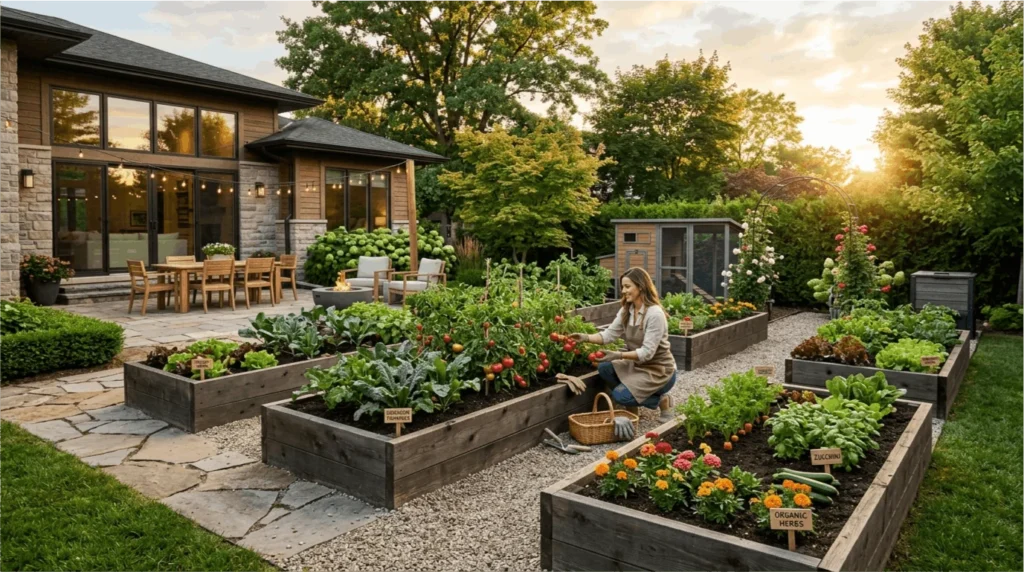
Why Raised Beds Are the Best Backyard Garden Idea
Before we dive into the designs, here’s why raised beds consistently outperform traditional in-ground gardens — and why they’re one of the most popular backyard garden upgrades you can make.
5 Benefits That Beat In-Ground Gardening
| Benefit | Why It Matters |
|---|---|
| Better soil control | You fill the bed with perfect loam — no clay, no rocks, no debris |
| Fewer weeds | 80% fewer weed seeds than native soil |
| Warmer soil in spring | Plant 2–3 weeks earlier in northern zones |
| Less bending | 12–24 inches high saves your lower back |
| Deters pests | 18 inches tall stops rabbits; add hardware cloth for voles |
One downside to know: raised beds dry out faster than in-ground gardens. We’ll solve that with mulch and drip irrigation in Idea #9. For a full overview of essential gardening tips that apply to all bed types, check our beginner guide.
10 Raised Bed Garden Ideas You Can Build This Weekend
Idea #1: Classic Wood Raised Bed (4×8 ft)
The 4×8 foot rectangle is the gold standard for raised bed garden ideas — large enough to feed a family of four but narrow enough to reach the center from either side.
Best for: First-time builders, vegetable gardens, suburban yards
Materials & Cut List
- 3 boards of untreated cedar or redwood (2″ x 8″ x 8′)
- 1 board (2″ x 4″ x 8′) for corner posts
- 32 outdoor wood screws (2.5–3 inches)
- Landscape fabric (optional, for bottom)
Cut list: Two 8-ft boards for sides, two 4-ft boards for ends.
Assembly time: 1 hour — Cost: $80–$120
💡 SeedToYard Pro Tip: Never use pressure-treated lumber made before 2004 (arsenic). Modern pressure-treated is likely safe for vegetables, but untreated cedar naturally resists rot for 10+ years. Spend the extra $20.
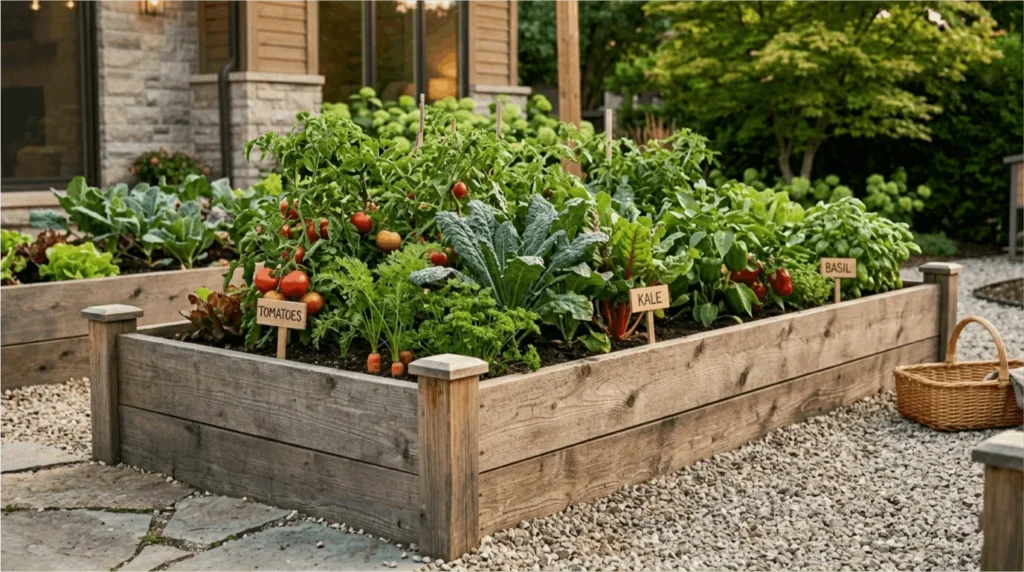
Idea #2: Galvanized Metal Raised Bed
Metal raised beds have exploded in popularity — and for good reason. They’re sleek, rust-resistant (galvanized steel lasts 20+ years), and warm up faster than wood in spring.
Best for: Modern home designs, hot climates
Why Metal is Trending
- No rot, no termites — unlike wood
- Clean, industrial look — pairs with modern homes
- Heats soil 5–8°F warmer — extends fall growing
- Lightweight — easy to relocate
Where to buy: Birdies, Vego Garden, or U-shaped galvanized troughs from farm supply stores (drill your own drainage holes). Cost: $100–$250
⚠️ Safety note: Galvanized steel contains zinc. At normal soil pH (6.0–7.0), zinc leaches at safe levels. Do NOT use galvanized for acidic plants like blueberries. For vegetables, it’s widely considered safe by extension services.
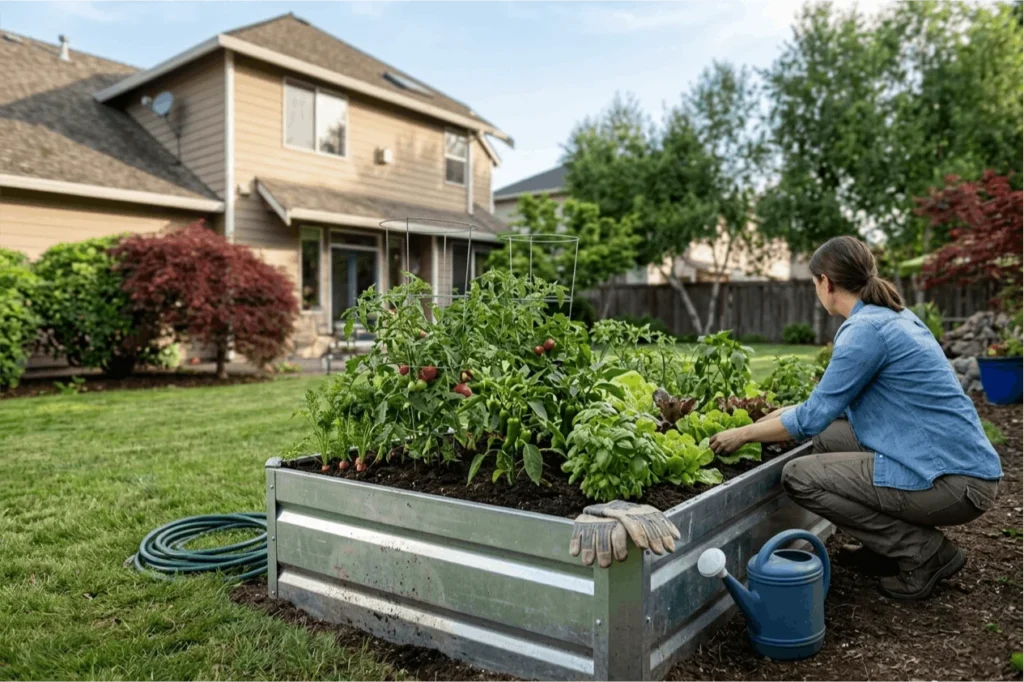
Idea #3: Corner Raised Bed Layout
Does your backyard have an awkward L-shape or a sunny corner near the fence? Use that dead space with a corner raised bed — one of the most creative raised bed garden ideas for small yards.
Best for: Small or oddly shaped yards, patios, decks
Design: Two 4-ft sides meeting at a 90° angle. Build two separate 3×3 ft beds or one continuous L-shaped bed using mitered corners.
Planting layout:
- Corner (hardest to reach): Tall plants (tomatoes, sunflowers)
- Outer edges (easy access): Herbs, lettuce, radishes
Cost: $60–$90
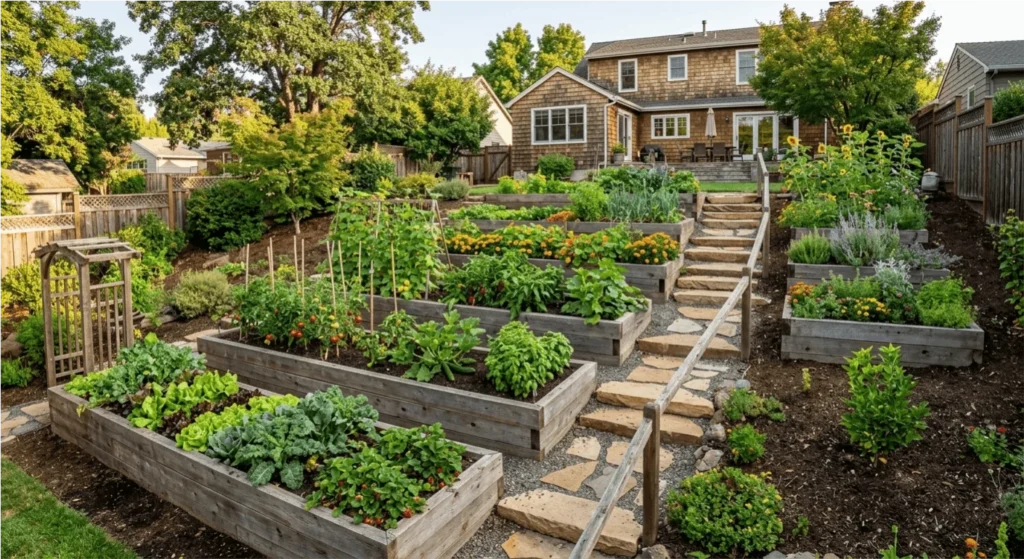
Idea #4: Tiered Raised Bed Garden
If your property slopes downhill, a tiered bed turns a problem into a beautiful feature. Each level sits higher than the one below, creating a stair-step effect.
Best for: Sloped backyards, decorative front-yard gardens
What to plant on each tier:
- Bottom (wettest): Celery, mint (in a pot), asparagus
- Middle: Peppers, bush beans, kale
- Top (driest, warmest): Tomatoes, herbs, strawberries
Cost: $150–$300 depending on materials
Idea #5: Small Space Raised Bed (4×4 ft)
Not everyone has a half-acre. A 4×4 foot bed fits on a balcony, small patio, or city yard. Despite the small footprint, you can grow surprising amounts using Square Foot Gardening methods. This is one of the most popular raised bed garden ideas for beginners.
Best for: Apartments, townhomes, first-time testers
Square Foot Gardening Layout (4×4 = 16 squares)
| Square | Plant | Quantity |
|---|---|---|
| 1–4 | Lettuce | 4 per square |
| 5–6 | Cherry tomatoes | 1 per square |
| 7–9 | Bush beans | 9 per square |
| 10–11 | Peppers | 1 per square |
| 12–13 | Radishes | 16 per square |
| 14–16 | Herbs (basil, cilantro, parsley) | 1–4 per square |
Yield: Enough for salads + cooking herbs for two people. Cost: $40–$60
Want help planning what to plant? Check our garden planning guide for a full beginner layout system.
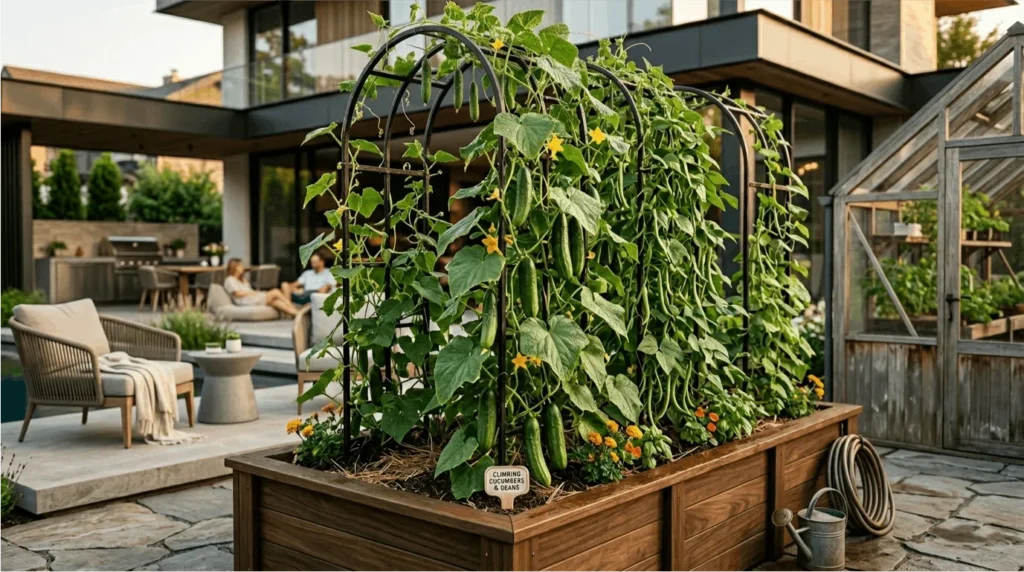
Idea #6: Raised Bed With Trellis
Why grow sprawling cucumbers or pole beans on the ground when they can climb? Adding a trellis to the north side of your raised bed doubles your growing space without increasing your footprint.
Best for: Small backyards, vertical gardening enthusiasts
5 Vegetables That Love Climbing
| Vegetable | Trellis Height | Notes |
|---|---|---|
| Pole beans | 5–6 ft | Most productive climbing veggie |
| Cucumbers (vining type) | 4–5 ft | Straighter fruits when hanging |
| Peas (shell/snow) | 4–6 ft | Plant in early spring |
| Indeterminate tomatoes | 6+ ft | Use sturdy cattle panel |
| Malabar spinach | 6 ft | Heat-loving summer green |
Simple trellis build: Pound two 6-ft T-posts into the bed ends. Attach cattle panel or nylon trellis netting. Check our garden tools guide for the best T-post drivers and netting options. Cost: $25–$40
Idea #7: Herb + Vegetable Combo Bed
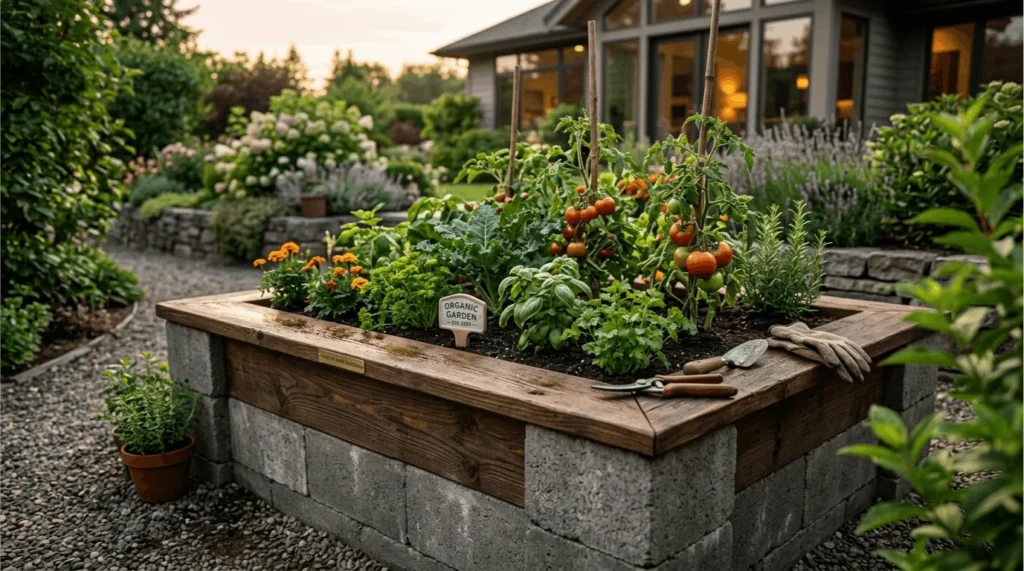
Companion planting isn’t just folklore — certain herbs genuinely improve vegetable growth and repel pests. This design interplants herbs directly among vegetables. It’s one of the smartest raised bed garden ideas for organic growers.
Best for: Organic gardeners, pest management without chemicals
Companion Planting Guide for Raised Beds
| Vegetable | Companion Herb | Benefit |
|---|---|---|
| Tomatoes | Basil | Improves flavor, repels flies/mosquitoes |
| Cabbage family | Dill, Mint (in pot) | Attracts beneficial wasps |
| Peppers | Cilantro | Attracts hoverflies (eat aphids) |
| Cucumbers | Nasturtium | Traps aphids away from cukes |
| Carrots | Rosemary | Deters carrot rust flies |
⚠️ SeedToYard Warning: Mint spreads aggressively. Always plant mint in a container buried in the raised bed, not directly in the soil.
Idea #8: Budget DIY Raised Bed Under $50
You do not need $200 worth of cedar. Here’s how to build a functional raised bed for under $50 — one of the most practical raised bed garden ideas for beginners on a budget.
Best for: Beginners testing gardening, renters, tight budgets
Free Wood Sources
- Pallet wood (look for “HT” stamp — heat treated, not methyl bromide)
- Construction site scraps (ask permission first)
- Facebook Marketplace “free lumber”
- Local fence company — they throw away cedar pickets with minor cracks
The $45 Bed (4×4 ft)
| Material | Cost |
|---|---|
| 8 concrete blocks (8″x8″x16″) | $16 |
| 2 cedar fence pickets (6 ft long) | $8 |
| 1 bag of screws | $6 |
| Landscape fabric | $5 |
| Cardboard (for bottom weed block) | Free |
| Total | $35–$45 |
Idea #9: Raised Bed With Drip Irrigation System
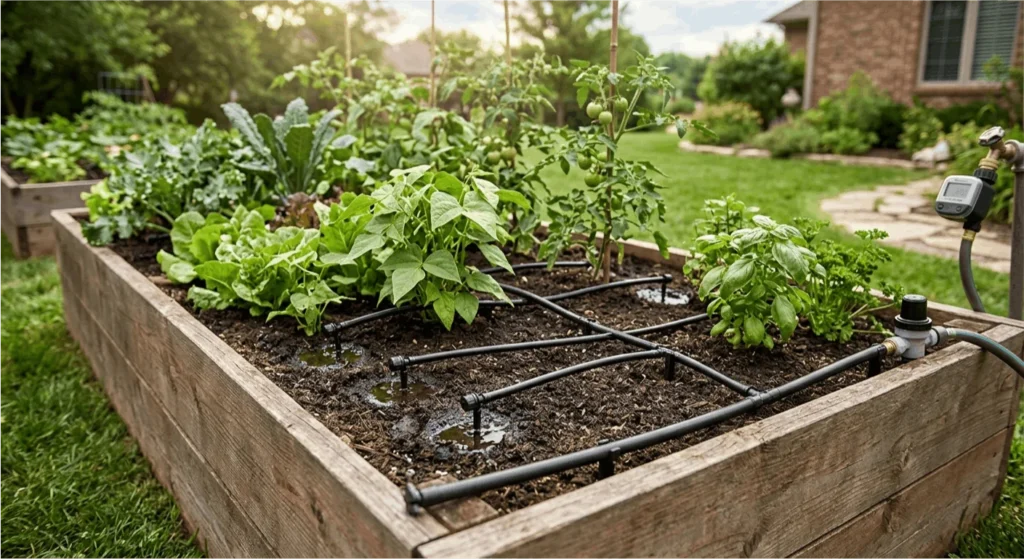
Hand-watering gets old by August. For under $30, you can install a drip irrigation system that saves you 20+ hours per season — a game-changer for any of these raised bed garden ideas.
Best for: Anyone who travels, forgets to water, or lives in a dry climate
Simple Drip Setup for $30
| Component | Approx. Cost |
|---|---|
| 25 ft of 1/4″ drip tubing | $8 |
| 10 drip emitters (0.5 GPH) | $6 |
| Hose thread adapter | $4 |
| Pressure regulator | $10 |
| Timer (optional but worth it) | $25 |
Installation (15 minutes):
- Run 1/2″ main tubing along the bed edge
- Poke 1/4″ tubing lines to each plant
- Insert emitter at the plant base
- Connect to spigot with timer
Set timer for 20 minutes every other day. Done. See our complete garden tools guide for the best drip irrigation kits available.
Idea #10: Kids’ Garden Raised Bed
Get your children excited about vegetables by giving them their own small raised bed with foolproof, sensory-friendly plants.
Best for: Families with children ages 3–12
Fun, Low-Maintenance Plants for Children
| Plant | Why Kids Love It |
|---|---|
| Sunflowers (Mammoth variety) | Grows taller than them |
| Cherry tomatoes | Pop-in-mouth snack right off the vine |
| Radishes | Ready in 25 days (instant gratification) |
| Strawberries (everbearing) | Sweet and produces all summer |
| Snap peas | Fun to pop open |
| Rainbow chard | Bright pink, yellow, red stems |
Design tips: Make the bed only 12 inches high (easy to reach). Paint the outside with chalkboard paint. Let kids decorate plant markers with their names. Cost: $30–$50 for a 3×3 ft bed
Best Raised Bed Kits to Buy
Not a DIY person? These pre-made kits arrive at your door in 2–3 days. SeedToYard may earn a commission if you purchase through these links at no extra cost to you.
| Brand | Best For | Size | Price Range | Why We Like It |
|---|---|---|---|---|
| Vego Garden | Metal, modern | 4×2 to 8×4 | $150–$400 | 20-year warranty, modular |
| Greenes Fence | Cedar, budget | 4×4 or 4×8 | $80–$150 | Easy assembly |
| Birdies | Premium metal | 5×2, 6×3 | $200–$350 | Very tall (29″) |
| Outsunny | Budget metal | 4×2 | $60–$90 | Great for first-timers |
SeedToYard recommendation: Start with the Greenes Fence 4×4 cedar kit ($80–$100). It’s affordable, looks great, and lasts 5–7 years. Upgrade to Vego metal when you’re ready to invest long-term. The National Gardening Association also has excellent resources for choosing the right bed size for your growing zone.
How to Fill Your Raised Bed (The Cheapest Method)
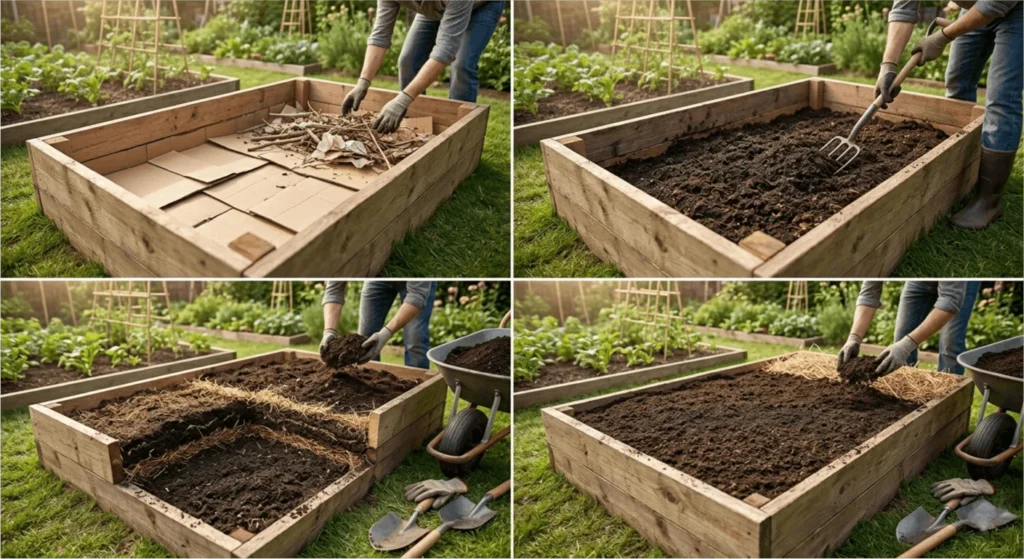
Choosing from these raised bed garden ideas is only half the work — what you fill them with matters just as much. The “lasagna method” saves 60% vs. buying all bagged soil:
- Layer cardboard at the bottom (kills grass underneath)
- Sticks and twigs (6 inches) — these break down slowly
- Grass clippings (4 inches)
- Compost (4 inches)
- Topsoil (2 inches on top)
For a full soil mixing guide including the best amendments for each vegetable type, see our complete gardening tips guide.
For bulk soil calculations: One 4×8 bed at 12 inches deep requires 32 cubic feet. Buy 1 cubic foot bags (32 bags) or bulk soil from a landscape supply ($30–$50 per cubic yard).
FAQ: Raised Bed Garden Ideas
What is the best size for a raised bed garden?
4×8 feet is best for vegetables — reaches all sides, fits standard lumber. 4×4 is best for small spaces or herb gardens. Width should never exceed 4 feet — otherwise you can’t reach the middle. Browse our garden planning guide for layout templates.
How deep should a raised bed be?
6–8 inches for leafy greens and herbs. 12 inches for most vegetables (tomatoes, peppers, beans). 18–24 inches for root crops (carrots, potatoes) or if you have poor native soil underneath.
What should I put at the bottom of a raised bed?
Cardboard (kills grass, decomposes) → Landscape fabric (optional, blocks weeds). Do NOT use plastic — it traps water. Hardware cloth (¼ inch mesh) at the bottom stops voles and gophers.
How many raised beds do I need for a family of 4?
Two 4×8 beds or four 4×4 beds. That’s roughly 64–80 square feet of growing space, enough for summer vegetables plus a surplus for canning/freezing.
Can I put a raised bed on concrete or a patio?
Yes, but add a 2-inch layer of gravel underneath for drainage. Use 12-inch deep beds minimum. Your plants will rely entirely on you for water and nutrients — no subsoil to tap.
Do raised beds need a bottom?
No — open bottoms allow roots to reach deeper soil and water to drain. Only add a solid bottom if placing on a deck (then drill drainage holes).
How far apart should raised beds be spaced?
Leave 2–3 feet between beds for wheelbarrow access and comfortable kneeling. For narrow side yards, 18 inches minimum.
Should I rotate crops in raised beds?
Yes — even more important than in-ground beds. Don’t plant tomatoes in the same raised bed two years in a row (prevents soil-borne diseases like blight). Our garden planning guide includes a simple crop rotation template.
What vegetables grow best in raised beds?
Almost all of them — but especially tomatoes, peppers, lettuce, carrots, beans, and herbs. Check our full vegetable gardening guide for zone-specific planting schedules.
What is the cheapest raised bed garden idea?
Idea #8 — the concrete block and reclaimed wood bed for under $50. For sourcing free materials and building steps, refer back to that section above.
From Idea to Harvest: Your Next Step
You now have 10 creative raised bed garden ideas for your backyard, complete with plans, costs, and planting guides for each. The only thing left is to choose one and start building.
Your assignment this week:
- Measure your sunniest spot (6+ hours of direct light)
- Pick one design from this list (start with #5 Small Space or #8 Budget if you’re unsure)
- Buy or gather materials this Saturday
- Build and fill with 50/50 mix of compost and topsoil
- Use our garden planning guide to map out exactly what to plant where
- Plant 3 things: lettuce (seeds), cherry tomato (seedling), basil (seedling)
One last truth from SeedToYard: Your first raised bed won’t be perfect. You’ll build it slightly crooked. You’ll overwater or underwater. And you’ll still grow more food than you expect.
Now go build something that grows.
