

Do you dream of walking into your backyard and picking fresh tomatoes, crispy lettuce, or sweet peppers for dinner? You’re not alone. More Americans than ever are searching for a simple, proven system on how to start a vegetable garden for beginners — and the good news is, you don’t need a green thumb, expensive tools, or acres of land.
In this complete guide, I’ll walk you through every single step — from choosing the right spot to harvesting your first vegetables. No confusing jargon. No unrealistic advice. Just practical, actionable steps that work whether you live in Texas, Michigan, or Florida.
Let’s dig in.
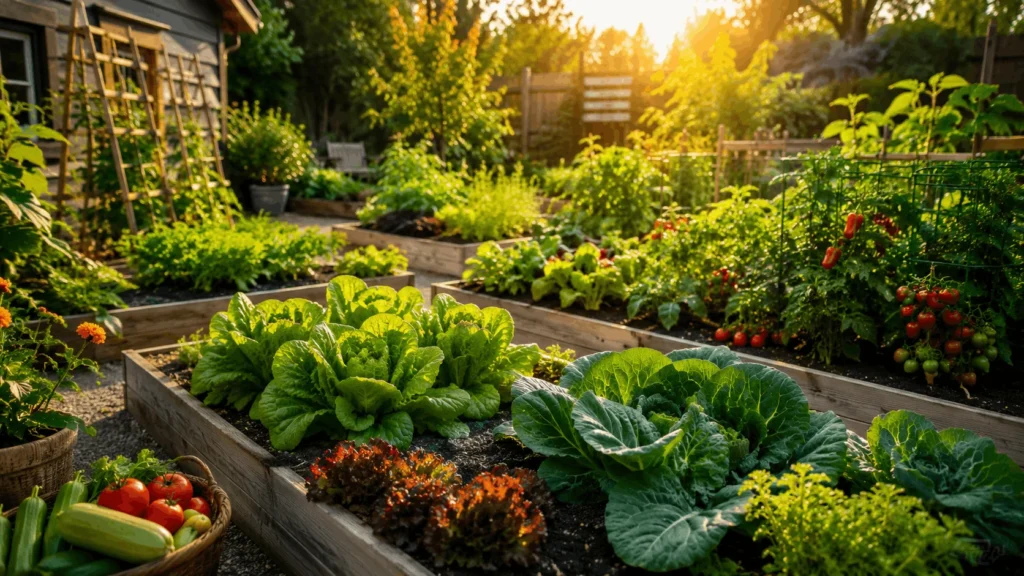
Why Start a Vegetable Garden at Home?
Before we get into the how, let’s talk about the why. Growing your own food offers benefits that go beyond saving money at the grocery store:
- Better flavor: Grocery store produce is often picked weeks early. Homegrown vegetables ripen naturally — tasting sweeter, crunchier, and more vibrant.
- Control over chemicals: You decide whether to use pesticides or fertilizers (and we’ll focus on natural methods here).
- Stress relief: Gardening is proven to lower cortisol levels. Many beginners find it meditative.
- Family fun: Kids are far more likely to eat vegetables they helped grow.
- Climate adaptation: You’ll learn exactly what grows well in your yard, not a generic guide.
If you’ve ever felt overwhelmed, start small. Even a single pot of cherry tomatoes counts as a win.
Step 1: Choose the Best Location for Your Garden
The first step in how to start a vegetable garden for beginners is always location — get this right and everything else follows.
Sunlight Requirements
Most vegetables need 6–8 hours of direct sunlight daily. Leafy greens like lettuce and spinach can tolerate 4–5 hours, but fruiting plants (tomatoes, peppers, squash) need full sun.
Pro tip: Observe your yard for one full day. Mark where the sun hits longest. Avoid spots shaded by trees, fences, or your house — especially in the morning.
Proximity to Water
You will water more often than you think. Place your garden within 50 feet of an outdoor spigot. Hauling a hose 200 feet gets old fast — and you’ll skip waterings, which hurts your plants.
Good Soil Drainage
After a heavy rain, check your potential spot. Does water pool for hours? That’s poor drainage. Vegetables hate “wet feet” (roots sitting in water). If your yard has heavy clay soil, don’t worry — raised beds solve this problem completely.
Step 2: Decide What Type of Garden You Want
Beginners often ask: “Should I dig up my lawn or buy a planter?” Here are your three best options.
In-Ground Gardens
- Pros: Low startup cost, large growing area.
- Cons: Requires good native soil, more weeds, harder on your back.
- Best for: Budget-conscious beginners with decent soil.
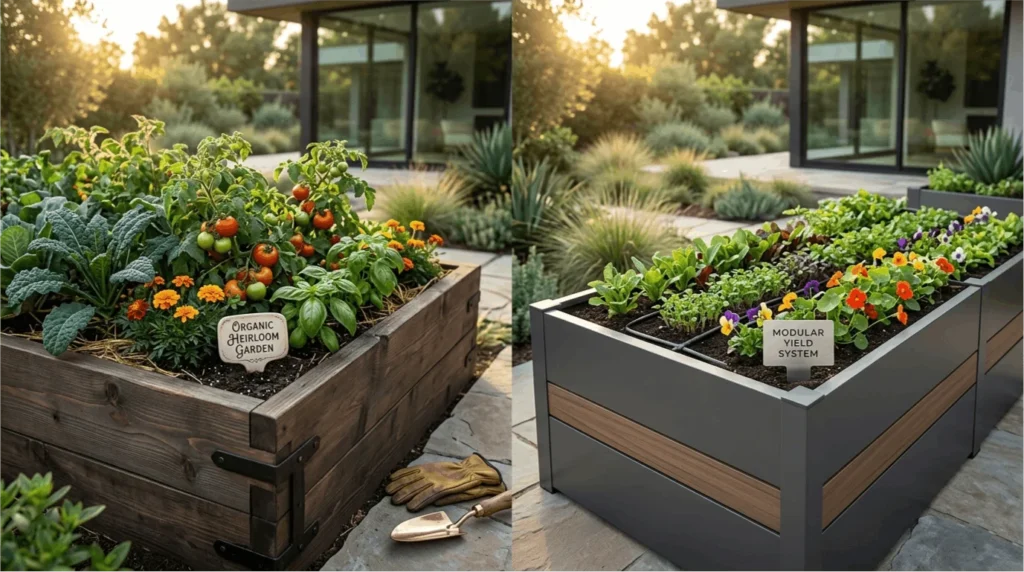
Raised Garden Beds (Best for Beginners)
- Pros: Better drainage, fewer weeds, easier to reach, warms up faster in spring.
- Cons: Higher upfront cost ($50–$150 per bed).
- Best for: Most beginners. Start with one 4′x4′ or 4′x8′ backyard garden bed.
Container Gardening (Perfect for Small Spaces)
- Pros: Portable, no digging, ideal for patios or balconies.
- Cons: Plants dry out faster, limited root space.
- Best for: Anyone testing the waters or short on space. See our full backyard garden guide for layout ideas.
Our recommendation: If you have a small yard and a budget for soil, build or buy a 4′x8′ raised bed. It’s forgiving, productive, and beginner-proof.
Step 3: Select the Easiest Vegetables for Beginners
Here’s where many people learning how to start a vegetable garden for beginners go wrong — they try to grow finicky vegetables like cauliflower or celery. Instead, start with high-reward, low-maintenance crops.
Top 10 Beginner-Friendly Vegetables
| Vegetable | Why It’s Easy | Best Season |
|---|---|---|
| Leaf Lettuce | Fast-growing, harvest in 30 days | Spring/Fall |
| Radishes | Ready in 25 days, almost foolproof | Spring/Fall |
| Cherry Tomatoes | Prolific, few pest issues | Summer |
| Green Beans | Germinate easily, fix own nitrogen | Summer |
| Zucchini | Extremely productive (one plant = plenty) | Summer |
| Peppers (bell/hot) | Low maintenance, few diseases | Summer |
| Spinach | Cold-tolerant, fast | Spring/Fall |
| Carrots | Set and forget (just thin them) | Spring/Fall |
| Cucumbers | Climbing saves space | Summer |
| Kale | Hardy, harvest for months | Spring/Fall/Winter |
Tip: Start with 3–5 vegetables your family actually eats. Don’t grow kale if no one likes it.
Step 4: Understand Your USDA Hardiness Zone & Frost Dates
Gardening isn’t about calendar months — it’s about temperature. Your zone tells you when to plant.
How to Find Your Zone
Go to the USDA Plant Hardiness Zone Map and enter your zip code. Write down your zone number. This single step prevents most beginner planting mistakes.
Why Last Frost Date Matters
Most vegetables will die if frozen. You need to know your area’s average last spring frost date. For example:
- New York City: around April 15
- Chicago: around May 1
- Houston: around February 28
Beginner rule: Plant warm-weather crops (tomatoes, peppers, beans) two weeks after your last frost date. Plant cool-weather crops (lettuce, spinach, peas) 4–6 weeks before your last frost.
Expert tip: Don’t trust the calendar blindly. Check the 10-day weather forecast. If a late freeze is predicted, cover young plants with an old bedsheet or bucket overnight.
Step 5: Prepare Your Soil Like a Pro
Soil is not dirt. Dirt is what you scrape off your shoes. Soil is a living ecosystem — and great soil means great vegetables. Good garden planning always starts with knowing your soil.
The Soil Test (Simple & Cheap)
You can buy a $15 soil test kit at any garden center or your local county extension office (many offer free or low-cost tests). Test for:
- pH (aim for 6.0–7.0 for most vegetables)
- Nitrogen, phosphorus, potassium levels
If your pH is off, add lime (raises pH) or sulfur (lowers pH). But for most beginners, focus on adding organic matter first.
Improving Soil with Compost and Organic Matter
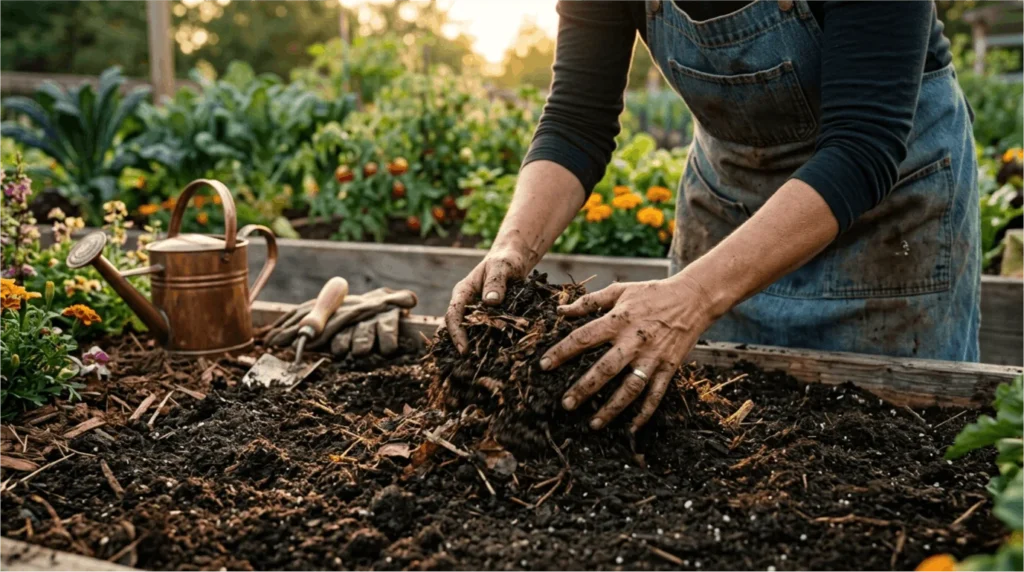
No matter what soil you start with, add 2–4 inches of compost and mix it into the top 6–8 inches. Compost:
- Improves drainage in clay
- Helps sandy soil hold water
- Feeds beneficial microbes
Shopping list for beginners:
- 1 bag of high-quality compost (like Black Kow or Coast of Maine)
- 1 bag of organic vegetable fertilizer (look for 4-4-4 or similar)
Mix those into your existing soil. Done. You don’t need 15 different amendments.
Step 6: Planting Your Vegetable Garden
You have your spot, your garden type, your vegetables, and your soil. Now let’s put seeds or plants in the ground.
Seeds vs. Seedlings
| Seeds | Seedlings | |
|---|---|---|
| Cost | Very cheap ($2–4 per pack) | More expensive ($4–6 per 6-pack) |
| Time to harvest | Longer (adds 4–6 weeks) | Faster (skip germination) |
| Skill level | Requires light, moisture control | Almost foolproof |
| Best for | Radishes, beans, lettuce, carrots | Tomatoes, peppers, cucumbers |
Beginner advice: Buy seedlings for tomatoes, peppers, and any vegetable you care most about. Direct-sow seeds for beans, lettuce, radishes, and carrots.
Proper Spacing and Depth
This is where beginners crowd plants. Read the seed packet or plant tag. If it says “space 12 inches apart,” believe it. Crowded plants compete for light and air, leading to disease and small vegetables.
Quick spacing guide:
- Tomatoes: 18–24 inches apart
- Peppers: 12–18 inches apart
- Lettuce: 6–8 inches apart
- Beans: 2–4 inches apart
Step 7: Watering, Mulching, and Feeding
The Best Watering Schedule
One inch of water per week (including rain) is the gold standard. Check our full watering guide for beginners for zone-specific schedules.
- Set an empty tuna can in your garden — water until it fills up. That’s 1 inch.
- Water deeply but less often. Two deep waterings per week encourage roots to grow down.
- Water at the base of plants, not from overhead. Wet leaves lead to fungal diseases.
A simple soaker hose or watering wand — see our beginner garden tools guide for the best options — is perfect for this.
Why Mulch is a Game-Changer
Spread 2–3 inches of mulch (straw, shredded leaves, or chemical-free grass clippings) around your plants after they’re a few inches tall. Mulch:
- Cuts watering needs by 50%
- Blocks 90% of weeds
- Keeps soil cool in summer heat
Avoid: Dyed landscape mulch or cedar chips (too acidic and woody for vegetables).
Step 8: Basic Maintenance and Pest Control
Here’s the truth: you will see bugs and imperfect leaves. That’s normal. Your goal isn’t a sterile garden — it’s a productive one. Our full gardening tips guide covers seasonal maintenance in detail.
Natural Pest Solutions (No Harsh Chemicals)
| Pest | Organic Solution |
|---|---|
| Aphids | Blast with hose water. Introduce ladybugs. |
| Tomato hornworms | Handpick (they glow under UV light at night). |
| Squash bugs | Lay boards on soil; collect bugs underneath each morning. |
| Slugs | Beer trap (shallow dish of beer sunk into soil). |
| Rabbits/Deer | 4-foot chicken wire fence (buried 6 inches deep). |
Expert tip: Healthy plants resist pests better than weak ones. Focus on good soil and watering first. Pests target stressed plants.
5 Common Mistakes Beginners Make (And How to Avoid Them)
- Planting too much, too soon — Start with one raised bed or 3–5 containers. You can always expand next year.
- Overwatering — Stick your finger 2 inches into the soil. If it’s wet, don’t water.
- Ignoring weeds — Pull weeds when they’re tiny (under 2 inches). A quick 5-minute session every other day beats a 2-hour marathon.
- Planting warm-season crops too early — Check your last frost date. Wait 2 weeks after. Cold soil rots seeds.
- Not labeling what you planted — Use plastic plant markers or popsicle sticks with a permanent marker. You’ll forget what’s what in two weeks.
Expert Tips for a Thriving Garden
The National Gardening Association recommends keeping a garden journal — noting what you planted, when, and what worked. Next year, you’ll have a fully custom plan built from real experience.
- Join a local gardening group. Facebook has “(Your County) Gardening” groups. Local advice beats general guides every time.
- Don’t chase perfection. Yellow leaves? Some bug holes? It’s fine. Aim for 80% success, not a magazine cover.
- Harvest often. The more you pick beans, zucchini, and tomatoes, the more they produce.
Final Thoughts: How to Start a Vegetable Garden for Beginners
Learning how to start a vegetable garden for beginners is a journey, not a one-weekend project. But here’s what most guides won’t tell you: the first year is for learning, not for a record harvest.
If you only grow one pot of cherry tomatoes and three lettuce plants — and you eat them — that’s a massive success.
Your action plan for this weekend:
- Pick a sunny spot (or buy two 5-gallon buckets for containers).
- Buy a bag of potting mix and one bag of compost.
- Buy seedlings of cherry tomatoes and lettuce starts.
- Use our garden planning guide to map out your space before you plant.
- Plant them. Water them. Watch them grow.
You now have everything you need. Now go put a seed in the ground.
FAQ: How to Start a Vegetable Garden for Beginners
How much does it cost to start a vegetable garden?
When figuring out how to start a vegetable garden for beginners, costs vary widely. A basic in-ground garden can cost under $50 (seeds, compost). A 4′x8′ raised bed with soil runs $150–$250. Containers can start at $30 for two buckets and soil.
What month should I start a vegetable garden?
It depends on your zone. In northern areas (Zone 5–6), start seeds indoors in March and plant outside in May. In the South (Zone 8–9), you can plant cool crops in February and warm crops in March/April.
Can I start a vegetable garden in just potting mix?
Yes, for containers. For raised beds, mix potting mix with compost. Never use garden soil in pots — it compacts and drowns roots.
What is the easiest vegetable to grow?
Radishes (ready in 25 days) and cherry tomatoes (prolific, forgiving). Both are nearly impossible to fail.
How often should I water my vegetable garden?
Most gardens need 1 inch of water per week, split into two deep waterings. Check our gardening tips for heat wave and rainy season adjustments.
Do I need a fence to keep animals out?
If you have rabbits, groundhogs, or deer, yes — a 4-foot chicken wire fence is your best investment. For squirrels, try netting or motion-activated sprinklers.
Can I grow vegetables in shade?
Partial shade (4–5 hours) works for lettuce, spinach, kale, and herbs like mint and chives. Tomatoes and peppers need full sun.
Is it cheaper to buy seeds or seedlings?
Seeds are far cheaper per plant but require more patience. Many beginners mix both — seeds for fast crops (lettuce, beans), seedlings for slow crops (tomatoes, peppers).
How do I know if my soil is good?
Healthy soil smells earthy, crumbles in your hand, and has visible earthworms. If it’s hard as a brick or dusty, add compost and check our soil improvement guide.
What if I kill my first plants?
Almost every gardener has killed plants — including experts. You didn’t fail; you learned. Try again with a different vegetable or spot. Review our garden planning tips to set yourself up better next time.
